Gyeongju Travel Guide: Korea's Ancient Silla Capital in One Day
Quick answer
- Gyeongju was the capital of the Silla kingdom for nearly a thousand years. Two UNESCO listings cover its Silla heritage: the Gyeongju Historic Areas and Seokguram Grotto with Bulguksa Temple.
- Get there by KTX from Seoul Station (adult standard-class fare example ₩44,500; fares vary by route), then use Naver Map for buses or taxis between sites.
- Save Donggung Palace and Wolji Pond for the evening. It's open 09:00–22:00 (last entry 21:30); adults pay ₩3,000.
Gyeongju was the capital of the Silla kingdom (57 BCE–935 CE), and its Silla sites are covered by two UNESCO World Heritage listings (1995 and 2000). Start with four sights: Bulguksa Temple, the Daereungwon tombs, Cheomseongdae and Donggung Palace and Wolji Pond (open until 22:00, adults ₩3,000). From Seoul Station, the KTX adult standard-class fare example is ₩44,500.
The Korea Tourism Organization calls Gyeongju "a living museum." Below: each sight in a table, English guiding, transport and a one-day plan.
Source: UNESCO, Korea Tourism Organization and Korail's KTX fare table (as of Sep 1, 2026); checked Oct 23, 2026.
The short version
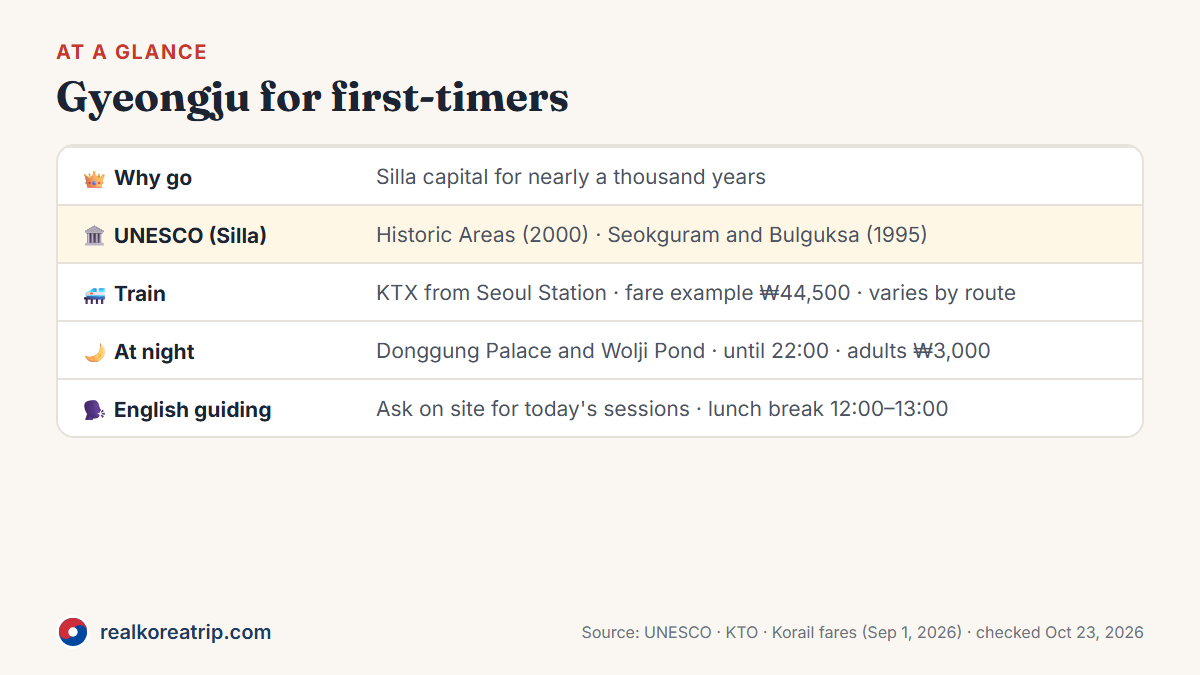
| What to know | |
|---|---|
| Why go | Capital of the Silla kingdom for nearly a thousand years (57 BCE–935 CE) |
| UNESCO (Silla) | Gyeongju Historic Areas (2000); Seokguram Grotto and Bulguksa Temple (1995) |
| Getting there | KTX from Seoul Station; adult standard-class fare example ₩44,500 (fares vary by route) |
| Top sights | Bulguksa Temple · Daereungwon tombs · Cheomseongdae · Donggung Palace and Wolji Pond |
| At night | Donggung Palace and Wolji Pond, open until 22:00 |
| English guiding | Walk-in sessions at major sites; ask on site (lunch break 12:00–13:00) |
Source: UNESCO, Korea Tourism Organization and Korail's KTX fare table (as of Sep 1, 2026; see our KTX guide); checked Oct 23, 2026.
Why Gyeongju matters
UNESCO dates the Silla dynasty from 57 BCE to 935 CE, and says the sites in and around Gyeongju "bear outstanding testimony" to its achievements. This guide focuses on the two World Heritage listings tied to Silla:
| UNESCO listing | Inscribed | What it covers |
|---|---|---|
| Gyeongju Historic Areas | 2000 | Five areas in and around the city: royal tombs, the old palace grounds with Cheomseongdae and Wolji Pond, and Buddhist sites on Mount Namsan |
| Seokguram Grotto and Bulguksa Temple | 1995 | An 8th-century grotto with a monumental stone Buddha looking toward the sea, and Bulguksa Temple, built in 774 |
Gyeongju also has a part in two other listings: Yangdong Village belongs to the Historic Villages of Korea (2010), and Oksan Seowon is one of the Seowon, Korean Neo-Confucian Academies (2019).
Source: UNESCO — Gyeongju Historic Areas, Seokguram Grotto and Bulguksa Temple, Hahoe and Yangdong and Seowon; checked Oct 23, 2026.
Where to start
Bulguksa Temple
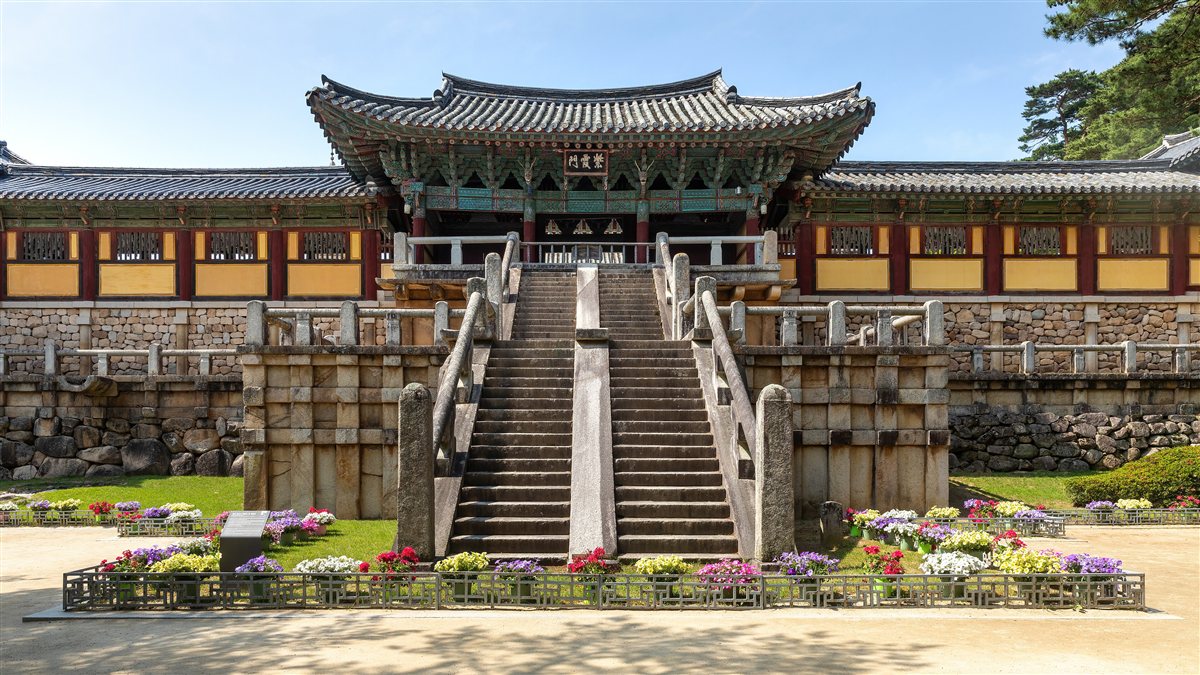
The Korea Tourism Organization calls Bulguksa one of Korea's most iconic Buddhist temples.
| Built | 774 |
|---|---|
| Don't miss | The Seokgatap and Dabotap pagodas (national treasures) |
| Nearby | Seokguram Grotto, on the slopes of Mount Toham, listed with it by UNESCO |
| Where | On the edge of the city: check the bus or taxi route in Naver Map |
Daereungwon Tomb Complex and Cheomseongdae
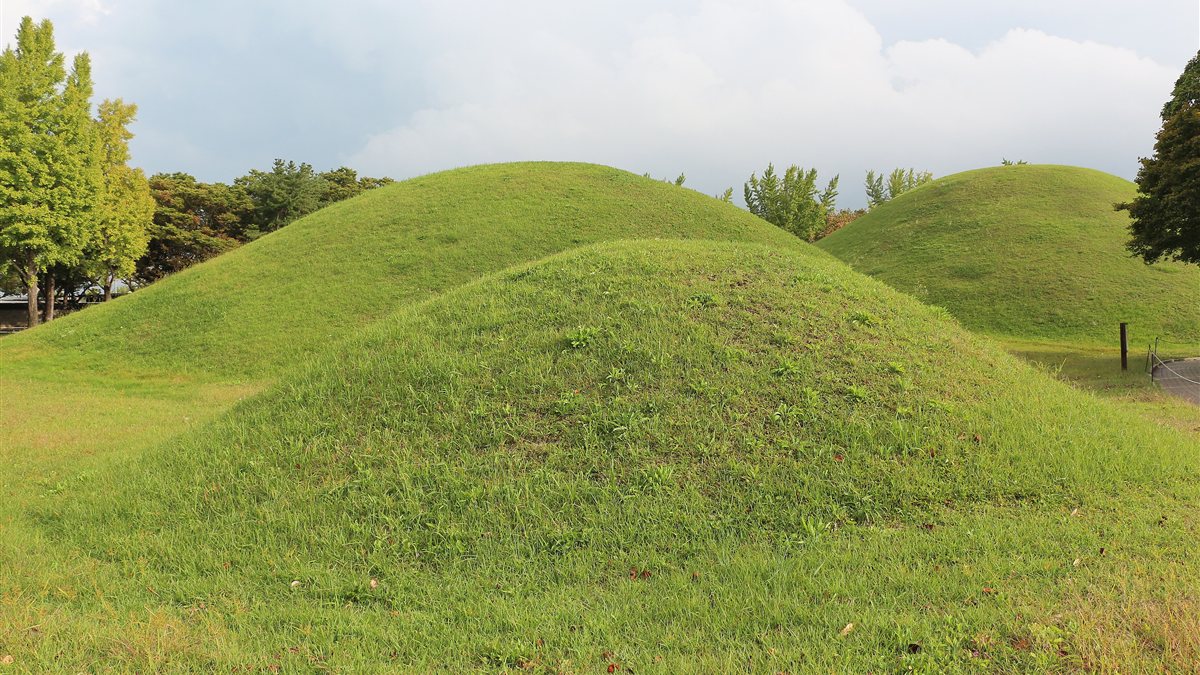
In the middle of town, the Silla royal tombs rise as rounded green mounds. UNESCO notes that excavations revealed rich grave goods of gold, glass and fine ceramics.
| Go inside | Cheonmachong, the tomb in Daereungwon open to the public, displays Silla-era artifacts including a golden crown |
|---|---|
| Walk on to | Cheomseongdae Observatory, part of the same Wolseong area as the old palace site and Wolji Pond |
Donggung Palace and Wolji Pond
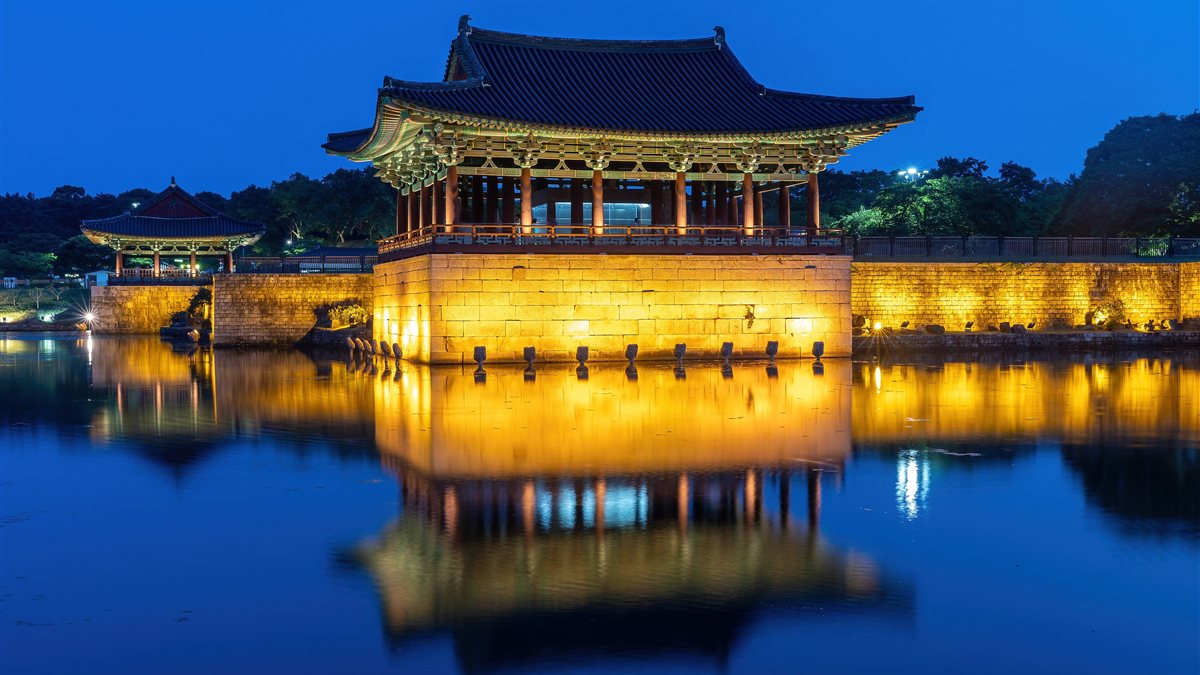
A secondary palace of the Silla court, used for banquets and important guests. The pond was dug in 674; its name, Wolji, means "a pond that reflects the moon."
| Open | 09:00–22:00, all year (last entry 21:30) |
|---|---|
| Admission | Adults ₩3,000 · teenagers ₩2,000 · children ₩1,000 |
| Best time | Sunset, when the pavilions are lit and reflected in the water |
Source: Korea Tourism Organization — Gyeongju course and Donggung Palace and Wolji Pond; UNESCO; checked Oct 23, 2026.
English guiding
Walk-in cultural guiding is offered at major heritage sites, including Bulguksa, Daereungwon and Donggung Palace, from the "Korean Culture & Tourism Guide" office near each entrance.
- When: sessions generally start on the hour from 10:00 to 16:00, with a lunch break from 12:00 to 13:00. Schedules can change.
- How: ask at the guide office for that day's English session. No reservation is needed.
- Bulguksa on Sundays: the city's regular guide roster doesn't cover Bulguksa on Sundays, so confirm there in advance.
Source: Korea Tourism Organization — Gyeongju course and Gyeongju City's cultural guide information; checked Oct 23, 2026.
Getting there and around
| From Seoul | KTX from Seoul Station to Gyeongju · adult standard-class fare example ₩44,500 · fares vary by route, so check the fare of the train you choose · how to book |
|---|---|
| Between sites | Sights are spread out: put each stop into Naver Map for the bus or taxi route |
| Paying | Bring a card and a little cash: see paying in Korea |
Source: Korail's KTX fare table (as of Sep 1, 2026); checked Oct 23, 2026.
A one-day plan
| Time | Where | Why then |
|---|---|---|
| Morning | Bulguksa Temple | It's on the edge of the city: go first |
| Afternoon | Daereungwon and Cheomseongdae | Both in the middle of town, close together |
| Evening | Donggung Palace and Wolji Pond | Lit up after sunset; last entry 21:30 |
Before you go
- Book your KTX from Seoul Station to Gyeongju and check the fare for your train.
- Install Naver Map for buses and taxis between sites.
- Plan Donggung Palace and Wolji Pond for the evening (last entry 21:30).
- Bring a little cash and a card.
- Want an English guide? Ask at the guide office near the site entrance; at Bulguksa on a Sunday, confirm in advance.
Source: Korea Tourism Organization and Korail's KTX fare table (as of Sep 1, 2026); checked Oct 23, 2026.
FAQ
Why is Gyeongju famous?
It was the capital of the Silla kingdom for nearly a thousand years. Its Silla heritage is covered by two UNESCO listings: the Gyeongju Historic Areas and Seokguram Grotto with Bulguksa Temple.
How do I get from Seoul to Gyeongju?
By KTX from Seoul Station. An adult standard-class fare example is ₩44,500; fares vary by route, so check the fare of the train you choose when booking.
Is Gyeongju worth a day trip?
In our view, a full day covers Bulguksa, the royal tombs and Donggung Palace at night. Staying overnight gives you more time for Seokguram and the other historic areas.
Are there English tours in Gyeongju?
Yes, walk-in guiding is offered at major heritage sites. Sessions generally start on the hour from 10:00 to 16:00 (not 12:00–13:00); ask at the guide office for that day's English session.
What time does Donggung Palace and Wolji Pond close?
It's open from 09:00 to 22:00, with last entry at 21:30.
- UNESCO World Heritage — Gyeongju Historic Areas
- UNESCO World Heritage — Seokguram Grotto and Bulguksa Temple
- UNESCO World Heritage — Historic Villages of Korea: Hahoe and Yangdong
- UNESCO World Heritage — Seowon, Korean Neo-Confucian Academies
- Korea Tourism Organization — Gyeongju: Heart of Ancient Korea
- Korea Tourism Organization — Donggung Palace and Wolji Pond
Last checked Oct 23, 2026. Details can change — please confirm with the official source before you travel.
Photo credits