Jeonju Day Trip from Seoul: Hanok Village Guide

Quick answer
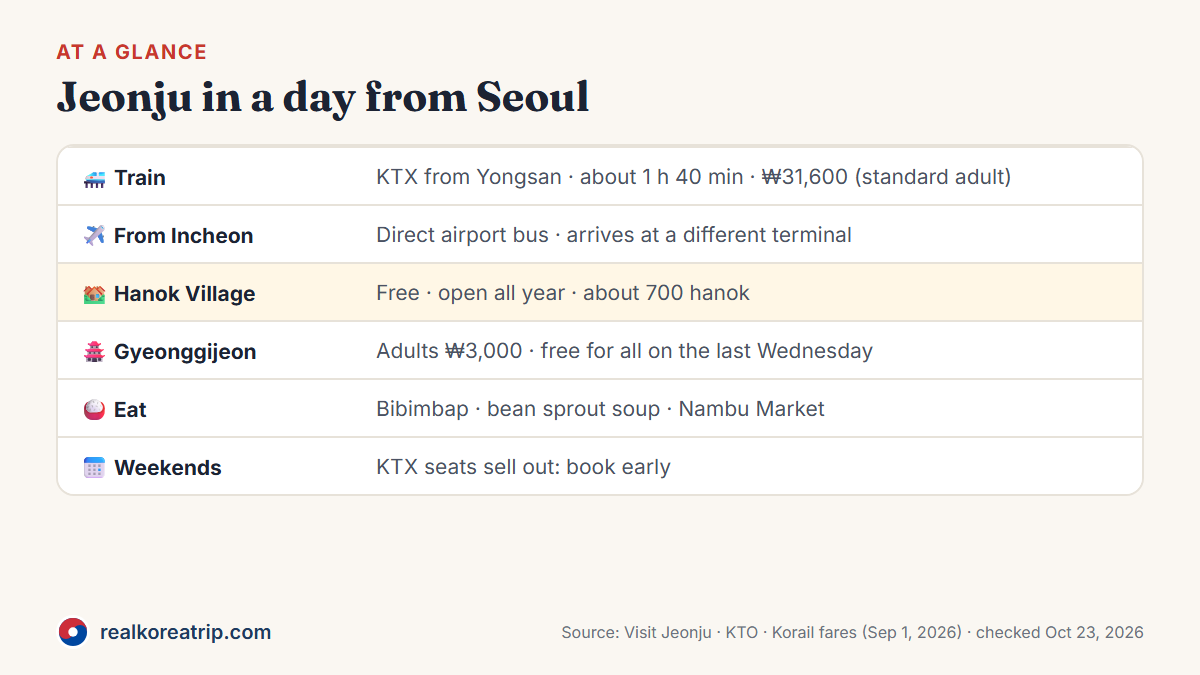
- Take the KTX from Yongsan Station. Seoul to Jeonju takes about 1 hour 40 minutes, and Yongsan has more Jeonju trains than Seoul Station. A standard adult fare is ₩31,600.
- Jeonju Hanok Village is free to enter and open all year. It's a historic neighborhood of around 700 hanok buildings, with Gyeonggijeon Shrine (adults ₩3,000) at its heart.
- Book ahead for weekends. Jeonju's tourism office says KTX seats sell out quickly on weekends, holidays and festival seasons.
Jeonju makes a manageable day trip from Seoul: a fast train, a walkable old town of tiled roofs, a royal shrine, and a food culture that UNESCO recognizes. This guide covers the parts that decide whether the day goes smoothly: which station to leave from, where you'll arrive, and what to see once you're there.
The short version
| What to know | |
|---|---|
| Train | KTX from Yongsan Station, about 1 hour 40 minutes; standard adult fare ₩31,600 |
| From the airport | Direct airport bus from Incheon to Jeonju (different arrival point from the train) |
| Hanok Village | Free to enter, open all year, around 700 hanok buildings |
| Gyeonggijeon Shrine | Adults ₩3,000; free for everyone on the last Wednesday of each month |
| Busy times | Weekends, holidays and festival seasons: book seats early |
Source: Visit Jeonju — getting to Jeonju, Korea Tourism Organization — Jeonju Hanok Village and Gyeonggijeon Shrine, and Korail's KTX fare table (as of Sep 1, 2026; see our KTX guide); checked Oct 23, 2026.
Getting there
By KTX (fastest). Jeonju's tourism office puts the KTX at about 1 hour 40 minutes from Seoul, and it points out that Jeonju trains leave Yongsan Station much more often than Seoul Station. If Seoul Station looks sold out, search from Yongsan. The standard adult fare from Yongsan to Jeonju is ₩31,600. Our KTX booking guide walks through buying tickets in English.
From Incheon Airport. If you're heading straight to Jeonju after landing, there's a direct airport bus. Tickets are sold at the counters and kiosks in the arrivals area, and the kiosks take overseas credit cards. For Daehan Limousine's buses to the Jeonju Limousine Terminal, the operator lists boarding at zone 12B at Terminal 1 and zone 9 at Terminal 2. Buses sold as "Jeonju" can stop at different places in the city, so check the operator and arrival terminal on your ticket and follow the bay printed on it. The tourism office suggests picking a bus at least 1 hour 30 minutes to 2 hours after your landing time, to allow for immigration and baggage.
Know where you'll arrive. Jeonju Station (trains), the Jeonju Limousine Terminal (airport buses) and the express and intercity bus terminals are all in different places. Put your exact arrival point and "Jeonju Hanok Village" into Naver Map to see the current bus or taxi route from there.
Source: Visit Jeonju — getting to Jeonju, Daehan Limousine — boarding locations (Korean); KTX fare from Korail's fare table as of Sep 1, 2026; checked Oct 23, 2026.
Jeonju Hanok Village
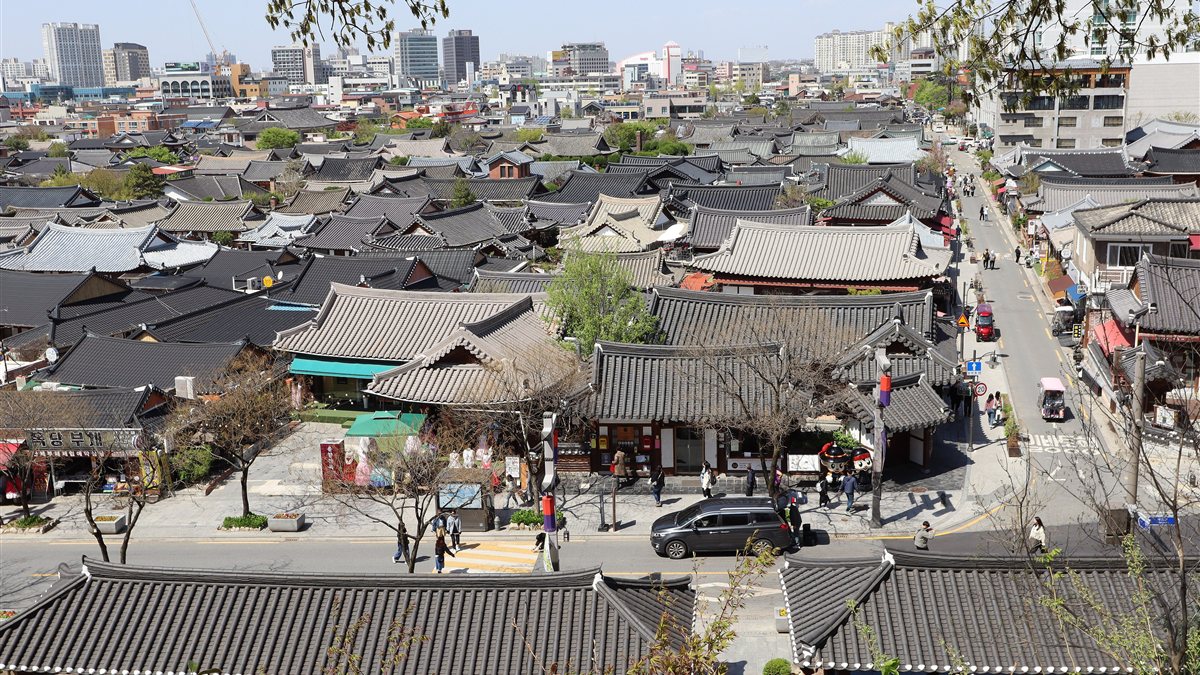
Jeonju Hanok Village is a large historic neighborhood in the city, with around 700 hanok buildings according to the Korea Tourism Organization. It grew from the early 1900s around Gyeonggijeon Shrine, Omokdae and the Jeonju Hyanggyo Confucian academy. Entry is free and it's open all year.
Most of the day is simply walking the lanes. The village also offers traditional performances, crafts and games, and hanbok rental is easy to find: the tourism organization notes there are many rental shops near Gyeonggijeon. To see a hanok from the inside, you can stay overnight in a hanok guesthouse or visit the Hanok Life Experience Hall.
Source: Korea Tourism Organization — Jeonju Hanok Village; checked Oct 23, 2026.
Gyeonggijeon Shrine
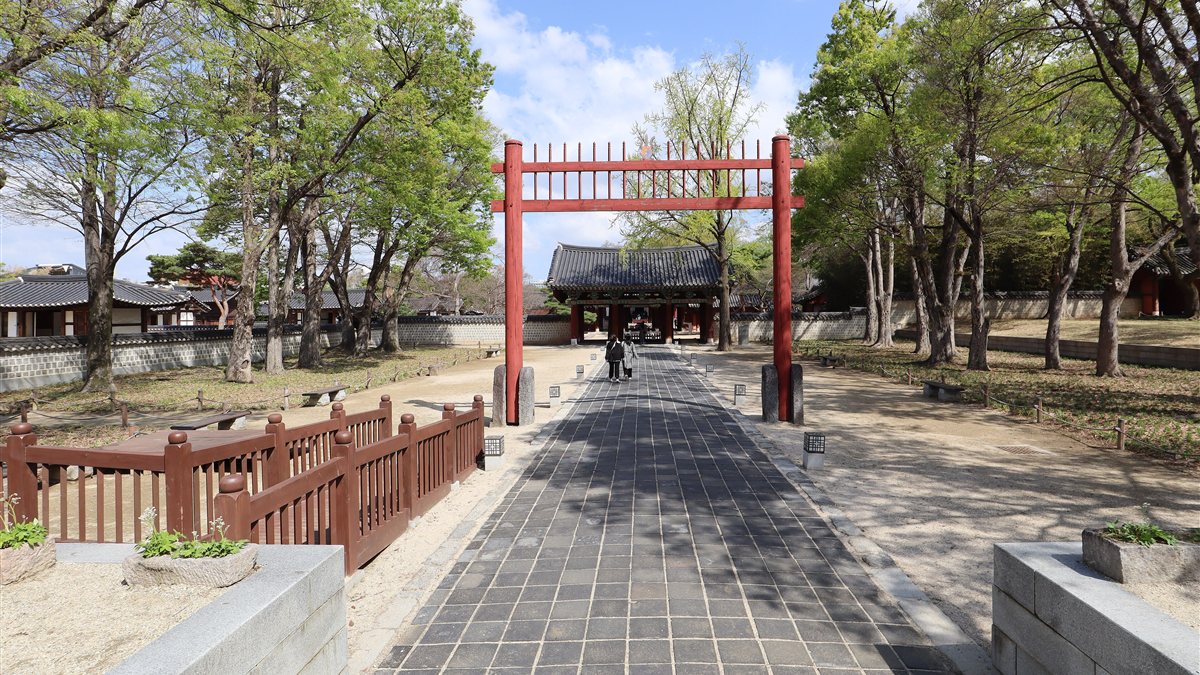
Gyeonggijeon sits inside the village. It was founded in 1410 and holds the portrait of King Taejo, the founder of the Joseon dynasty. Inside the grounds is Jeonju Sago, one of the four repositories for the Annals of the Joseon Dynasty, and the only one whose copy survived the Imjin War (1592–1598). Your shrine ticket covers it.
Admission is ₩3,000 for adults (25–64), ₩2,000 for ages 13–24 and ₩1,000 for children aged 7–12. Everyone gets in free on the last Wednesday of every month, and children aged 6 and under are always free. Jeonju City's own guide lists the free entry for people 65 and over as being for Korean nationals, so older overseas visitors shouldn't assume age alone makes it free; ask at the ticket office.
Opening hours change with the seasons: 09:00–19:00 from March to May and in September and October, 09:00–20:00 from June to August, and 09:00–18:00 from November to February. The last entry is one hour before closing. The Korea Tourism Organization suggests pairing it with Jeondong Cathedral nearby.
Source: Korea Tourism Organization — Gyeonggijeon Shrine, Jeonju Hanok Village — Gyeonggijeon (Korean) and Visit Jeonju — Jeonju Sago; checked Oct 23, 2026.
Getting around the village
The village is compact enough to walk. Jeonju also runs a free shuttle all year, mainly for people who park, connecting Hanok Village Public Parking Lot No. 4 with the village. On weekdays one bus makes 16 runs; on weekends and holidays it runs frequently from 10:00 to 18:30.
Source: Visit Jeonju — shuttle bus; checked Oct 23, 2026.
What to eat
Jeonju is a UNESCO City of Gastronomy, and bibimbap is its signature. We cover the dishes, the markets and where to find them in what to eat in Jeonju.
Before you go
- Book your KTX from Yongsan, early if it's a weekend or holiday.
- Check which Jeonju arrival point you're using (station or bus terminal).
- Install Naver Map for the route from there to the village.
- Bring a little cash and a card; see paying in Korea.
- Note Gyeonggijeon's seasonal hours (last entry one hour before closing).
Source: Visit Jeonju — getting to Jeonju and Korea Tourism Organization — Gyeonggijeon Shrine; checked Oct 23, 2026.
FAQ
How do I get from Seoul to Jeonju?
The KTX is fastest: about 1 hour 40 minutes, with more departures from Yongsan Station than from Seoul Station. A standard adult ticket from Yongsan costs ₩31,600. There's also a direct airport bus from Incheon.
Is Jeonju Hanok Village free?
Yes. The village is free to enter and open all year. Some sights inside charge admission, such as Gyeonggijeon Shrine (₩3,000 for adults).
Is a day trip to Jeonju enough?
In our view, a full day covers the Hanok Village, Gyeonggijeon and a couple of meals. If you'd like to stay in a hanok, Jeonju has hanok guesthouses for an overnight stay.
When is Gyeonggijeon free?
On the last Wednesday of every month, for everyone. Children aged 6 and under are always free. The free entry for people 65 and over is listed for Korean nationals, so overseas seniors should check at the ticket office.
- Visit Jeonju (Jeonju City) — Getting to Jeonju
- Visit Jeonju — Free Hanok Village shuttle bus
- Korea Tourism Organization — Jeonju Hanok Village
- Korea Tourism Organization — Gyeonggijeon Shrine
- Jeonju Hanok Village (Jeonju City) — Gyeonggijeon hours and admission (Korean)
- Daehan Limousine — Boarding locations (Korean)
- Visit Jeonju — Jeonju Sago (History Repository)
Last checked Oct 23, 2026. Details can change — please confirm with the official source before you travel.
Photo credits