Gangneung Travel Guide: Ojukheon, Beaches, Coffee and Chodang Tofu
Quick answer
- Gangneung is an east-coast city of beaches, hanok estates and coffee. Start with Ojukheon, birthplace of the mother and son on Korea's 50,000- and 5,000-won notes (adults ₩3,000; last entry 17:00).
- Eat Chodang sundubu, soft tofu traditionally set with seawater, and try a coffee at Anmok Beach, where Gangneung's coffee culture started with vending machines.
- Get there by KTX-Eum: adult standard-class fares are ₩27,600 from Seoul Station or ₩26,000 from Cheongnyangni (Korail fare table as of Sep 1, 2026). These include a temporary discount that ends when faster running starts on the Cheongnyangni–Seowonju section.
Gangneung, on Korea's east coast at the end of the KTX-Eum Gangneung Line, pairs beaches with Joseon-era hanok estates and a food scene UNESCO named a Creative City of Gastronomy in 2023. Start with Ojukheon, birthplace of Shin Saimdang and her son Yulgok, the mother and son on Korea's 50,000- and 5,000-won notes (adults ₩3,000; last entry 17:00), then Seongyojang (adults ₩5,000), Gyeongpo Beach and a bowl of Chodang sundubu.
Source: Ojukheon Municipal Museum (Korean), Korea Heritage Service, Seongyojang (Korean), Gangneung City (Korean) and Korea Tourism Organization; checked Oct 30, 2026.
The short version
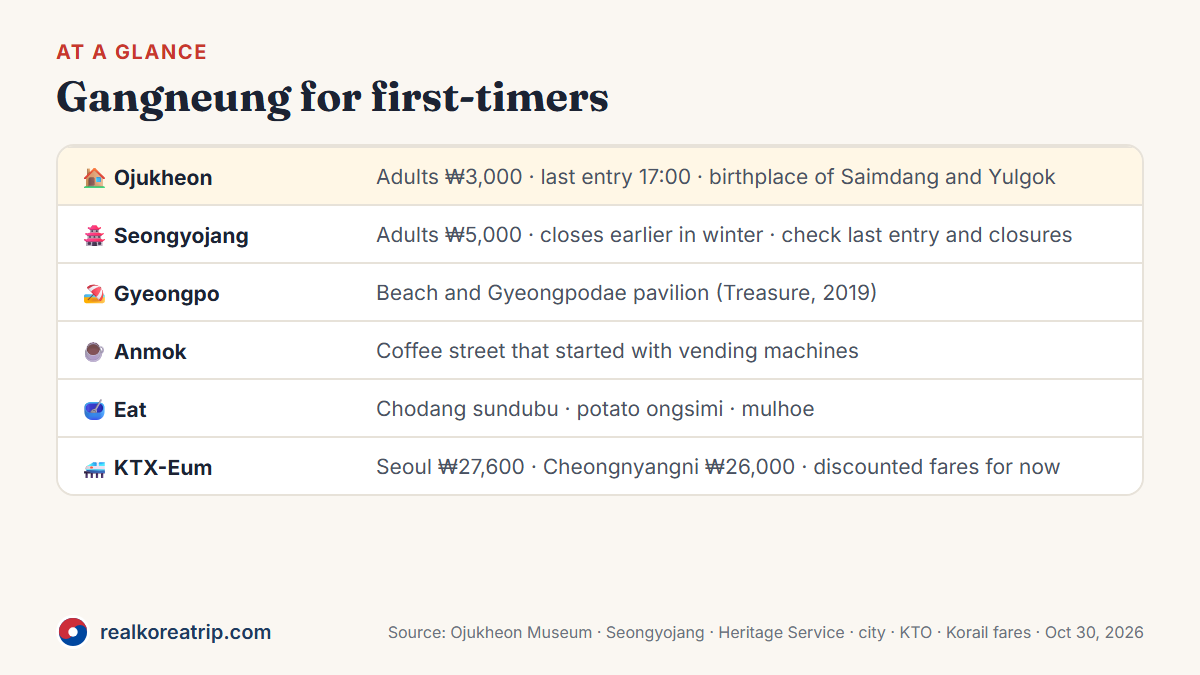
| What to know | |
|---|---|
| Why go | East-coast beaches, Joseon-era hanok estates, coffee and tofu |
| UNESCO | Gangneung Danoje Festival (proclaimed 2005, inscribed 2008) · Creative City of Gastronomy (2023) |
| Getting there | KTX-Eum from Seoul Station (adult standard class ₩27,600) or Cheongnyangni (₩26,000); fares from Korail's table as of Sep 1, 2026 |
| Top sights | Ojukheon · Seongyojang · Gyeongpodae and Gyeongpo Beach · Anmok coffee street |
| Eat | Chodang sundubu · potato ongsimi · mulhoe · Jumunjin fish market |
Source: UNESCO, Gangneung City (Korean) and Korail (Korean); KTX fares: Korail fare table (as of Sep 1, 2026; Korean); checked Oct 30, 2026.
Ojukheon
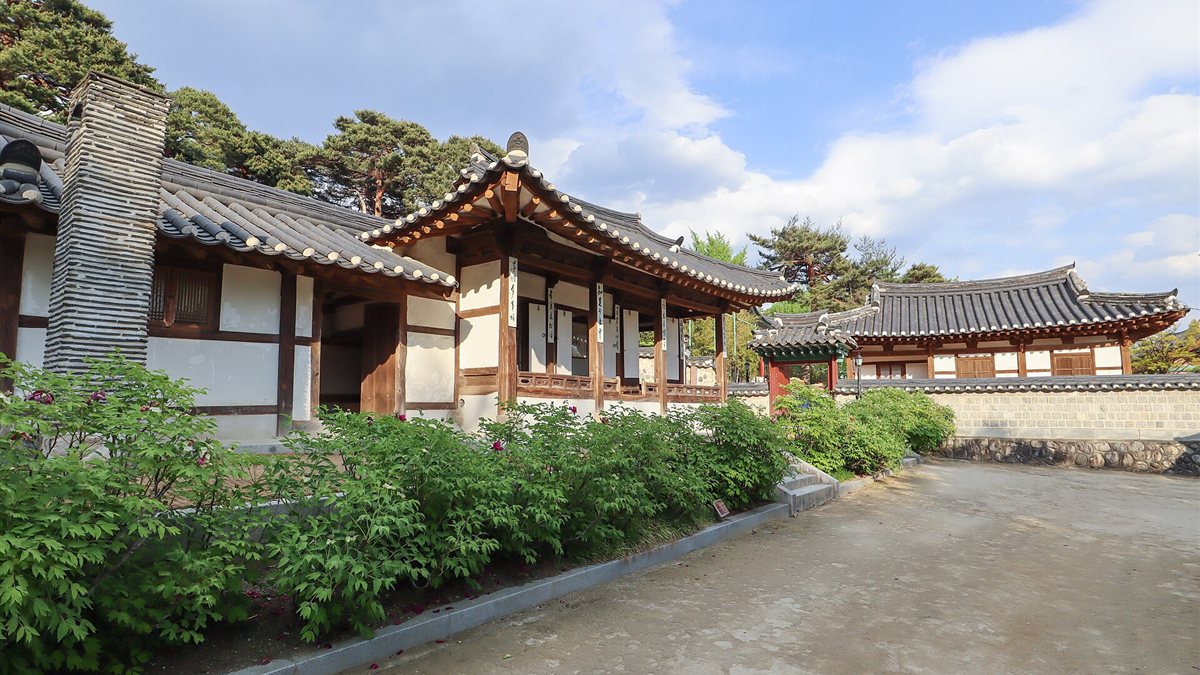
Ojukheon is the house where Shin Saimdang (1504–1551) and her son Yi I, the Confucian scholar known as Yulgok (1536–1584), were born, the Korea Heritage Service says; Yulgok was born in its Mongryongsil room. It's a Treasure (designated 1963), named for the black bamboo (ojuk) around the house. The Korea Tourism Organization calls it the birthplace of the figures on Korea's banknotes, and the city museum's currency gallery displays the portraits of Yulgok and Saimdang by the artist who drew the 50,000- and 5,000-won note designs.
| Hours | Entry 09:00–17:00, then you can stay until 18:00 |
|---|---|
| Closed | Open year-round; on Jan 1, Seollal and Chuseok Day the house is open but the indoor exhibition halls close |
| Admission (Ojukheon and the city museum) | Adults ₩3,000 · teenagers ₩2,000 · children ₩1,000 · 65 and over free (bring ID) |
| Discount | 50% off on the last Wednesday of the month ("Culture Day") |
| Parking | Free |
Source: Ojukheon Municipal Museum — visitor information, Ojukheon and currency gallery (Korean); Korea Heritage Service; Korea Tourism Organization; checked Oct 30, 2026.
Seongyojang
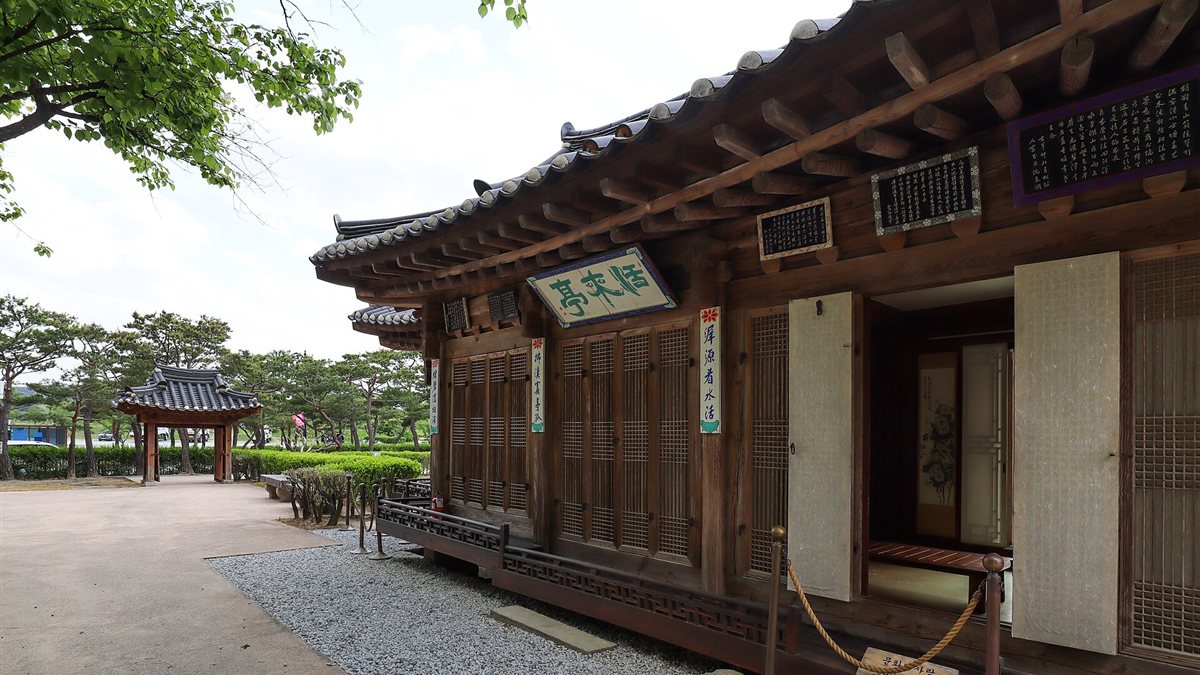
Seongyojang is a Joseon-era noble family house that grew over time rather than being built to a single plan; its Yeolhwadang hall dates from 1815. The name means "boat-bridge manor," after the village people once reached by boat. Descendants have lived here for 10 generations over more than 300 years, the heritage service's signboard text says.
| Hours | 09:00–18:00 in summer · 09:00–17:00 in winter. The site's general footer gives a 17:30 ticket cutoff, which doesn't fit winter closing, so confirm the winter last-entry time before a late visit |
|---|---|
| Admission | Adults ₩5,000 · discounts (teenagers, 65 and over and others) ₩3,000 · children ₩2,000 |
| Guided commentary | On the hour 09:00–16:00 (not 12:00–13:30), 30–40 minutes; the site doesn't say which languages |
| Rules | No pets except guide dogs, no outside food, no drones without permission |
Source: Seongyojang and fees and guiding (Korean) and Korea Heritage Service (Korean); checked Oct 30, 2026.
Gyeongpodae, Gyeongpo Beach and Anmok coffee street
- Gyeongpodae Pavilion: first built in 1326 and later moved and rebuilt, it's a pavilion that poets, calligraphers and painters loved to visit, the Korea Heritage Service says. It became a Treasure in 2019, and the Korea Tourism Organization singles it out for cherry blossom season.
- Gyeongpo Beach: about 1.8 km of sand (Gangneung City), which KTO calls one of the most famous beaches on Korea's east coast; Gangneung City lists it as free to visit.
- Anmok Beach coffee street: Gangneung's coffee culture began with instant coffee from the vending machines at Anmok, the city says; today there are hundreds of specialty cafés around Gangneung, and the city's coffee festival has run since 2009.
Source: Korea Heritage Service — Gyeongpodae, Korea Tourism Organization — course and coffee festival (Korean), Gangneung City — Gyeongpo Beach and coffee (Korean); checked Oct 30, 2026.
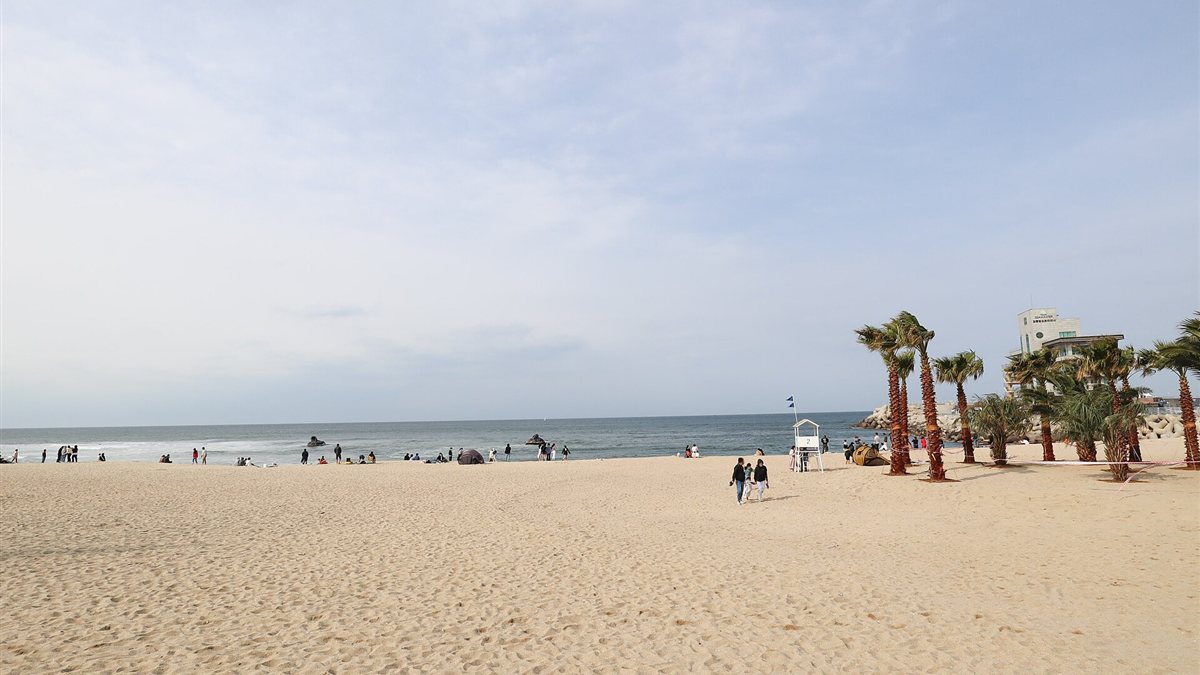
Coming for the first sunrise of the year? Gangneung City notes that many visitors come to Gyeongpo Beach for the New Year sunrise and recommends booking a room early. Look for the city's New Year event notice in December.
What to eat
| Dish | What it is |
|---|---|
| Chodang sundubu | Soft tofu traditionally set with East Sea seawater, from Chodang village, named after the pen name of Heo Yeop. About 20 places in Chodang-dong make their own tofu, the city says; look for sundubu gelato and sundubu coffee too |
| Potato ongsimi | Dumplings of potato starch cooked in an anchovy, kelp and potato broth, often with buckwheat or knife-cut noodles |
| Mulhoe | Cold raw-fish soup; Gangneung's is known for a spicy kick |
| Jang-kalguksu | Knife-cut wheat noodles in a spicy anchovy broth seasoned with red chili paste and soybean paste |
| Jumunjin fish market | A market dating from 1936 with squid, mackerel, pollack and crab; the city suggests trying snow crab there |
Source: Gangneung City — UNESCO Creative City of Gastronomy (Korean), Korea Tourism Organization — Chodang Sundubu Village (Korean), Korea Tourism Organization — Jang-kalguksu and Gangneung City — Jumunjin market; checked Oct 30, 2026.
Gangneung Danoje Festival
UNESCO describes Gangneung's Danoje as a four-week-long festival around Dano, with a shamanistic ritual on the Daegwallyeong ridge, folk songs and a mask drama. UNESCO proclaimed it a Masterpiece of the Intangible Heritage in 2005 and inscribed it on the Representative List in 2008. Its dates follow the lunar calendar: in 2026 the main festival ran June 15–22. The 2027 dates haven't been announced yet; watch the festival committee's site (Korean).
Source: UNESCO and Gangneung Danoje Festival Committee (Korean); checked Oct 30, 2026.
Getting there and around
| By train | Take a Gangneung-bound KTX-Eum from Seoul Station or Cheongnyangni. Trains bound for Jeongdongjin and Donghae follow a different branch and don't stop at Gangneung Station, so check the destination when you book (tickets open at 07:00, two months ahead) |
|---|---|
| KTX fares (adult) | From Seoul Station: standard ₩27,600 · premium class (udeung: fare plus seat surcharge) ₩33,100. From Cheongnyangni: standard ₩26,000 · premium class ₩31,200 |
| Fare condition | Until faster running starts on the Cheongnyangni–Seowonju section, Korail charges this section at a temporary discount. After that, its table shows standard-class fares of ₩30,900 from Seoul and ₩29,200 from Cheongnyangni. Check the fare shown when you book |
| In town | Use Naver Map for buses or taxis between Ojukheon, Gyeongpo and Anmok |
| Paying | Bring a card and some won: see paying in Korea |
Source: Korail — Gangneung Line notice (Korean), Korail KTX fare table (as of Sep 1, 2026, sheet 19 "Seoul–Cheongnyangni–Gangneung, Donghae"; Korean) and our KTX booking guide; checked Oct 30, 2026.
A one-day plan
| Time | Where | Why then |
|---|---|---|
| Morning | Ojukheon, then Seongyojang | Both close to entry in the late afternoon |
| Lunch | Chodang sundubu | Chodang village is on the way to the coast |
| Afternoon | Gyeongpodae, then Gyeongpo Beach | See the lakeside pavilion, then continue to the beach |
| Late afternoon | Anmok Beach for coffee | Coffee by the sea before your train |
Before you go
- Book your KTX-Eum to Gangneung (adult standard class ₩27,600 from Seoul Station, ₩26,000 from Cheongnyangni) and check the fare shown for your train.
- Reach Ojukheon by 17:00 and check Seongyojang's notices for closures.
- Visiting on the last Wednesday of the month? Ojukheon is half price.
- Coming for New Year's sunrise? Book a room early.
- Install Naver Map for buses and taxis.
Source: Ojukheon Municipal Museum (Korean), Seongyojang (Korean) and Gangneung City; checked Oct 30, 2026.
FAQ
What is Gangneung known for?
Its beaches, the hanok estates of Ojukheon and Seongyojang, Chodang soft tofu and coffee. UNESCO lists its Danoje Festival and named it a Creative City of Gastronomy in 2023.
How do I get from Seoul to Gangneung?
Take the KTX-Eum on the Gangneung Line from Seoul Station or Cheongnyangni. Korail's fare table (as of Sep 1, 2026) lists adult standard-class fares of ₩27,600 from Seoul and ₩26,000 from Cheongnyangni, including a temporary discount that ends when faster running starts on the Cheongnyangni–Seowonju section. Check times and the fare shown when you book.
How much is Ojukheon?
Adults pay ₩3,000, teenagers ₩2,000 and children ₩1,000; people aged 65 and over get in free with ID. Last entry is 17:00.
What is Chodang sundubu?
Soft tofu from Gangneung's Chodang village, traditionally set with seawater; a Korea Tourism Organization guide describes the village's tofu as now made with deep-sea water, so ask your restaurant.
When is the Gangneung Danoje Festival?
It follows the lunar calendar, so the dates change each year. In 2026 it ran June 15–22; the 2027 dates haven't been announced yet.
- Ojukheon Municipal Museum, Gangneung — Visitor information (Korean)
- Korea Heritage Service — Ojukheon House, Gangneung
- Seongyojang — Visitor information (Korean)
- Korea Heritage Service — Seongyojang House (Korean)
- Korea Heritage Service — Gyeongpodae Pavilion
- UNESCO Intangible Cultural Heritage — Gangneung Danoje Festival
- Gangneung City — UNESCO Creative City of Gastronomy (Korean)
- Korea Tourism Organization — Gangneung course
- Korea Tourism Organization — Chodang Sundubu Village (Korean)
- Gangneung Danoje Festival Committee (Korean)
- Korail — Gangneung Line KTX-Eum notice (Korean)
- Korail — Train fares and timetables (KTX fare table, as of Sep 1, 2026; Korean)
Last checked Oct 30, 2026. Details can change — please confirm with the official source before you travel.
Photo credits
We publish new guides regularly and update old ones when fares, rules or hours change. Follow our free RSS feed in any feed reader (such as Feedly or Inoreader), or check the latest guides on our homepage.