What to Eat in Jeonju: Bibimbap, Bean Sprout Soup and Nambu Market

Quick answer
- Start with Jeonju bibimbap. Jeonju City describes it as more than 30 ingredients in one bowl, with rice cooked in beef bone broth and Jeonju's own bean sprouts.
- Then try kongnamul gukbap (bean sprout soup with rice). The city recommends it with a poached egg, sesame oil and roasted laver, and pairs it with moju, a herbal liquor.
- Go to Nambu Market for pisundae, the early-morning Dawn Goblin Market (go before 9 a.m.) and the market's youth mall and night market.
Jeonju is a UNESCO City of Gastronomy. If you only have a day, three things are worth knowing about: Jeonju bibimbap, the city's bean sprout soup with rice, and Nambu Market. Here's what each one is, how it's served, and where to find it.
The short version
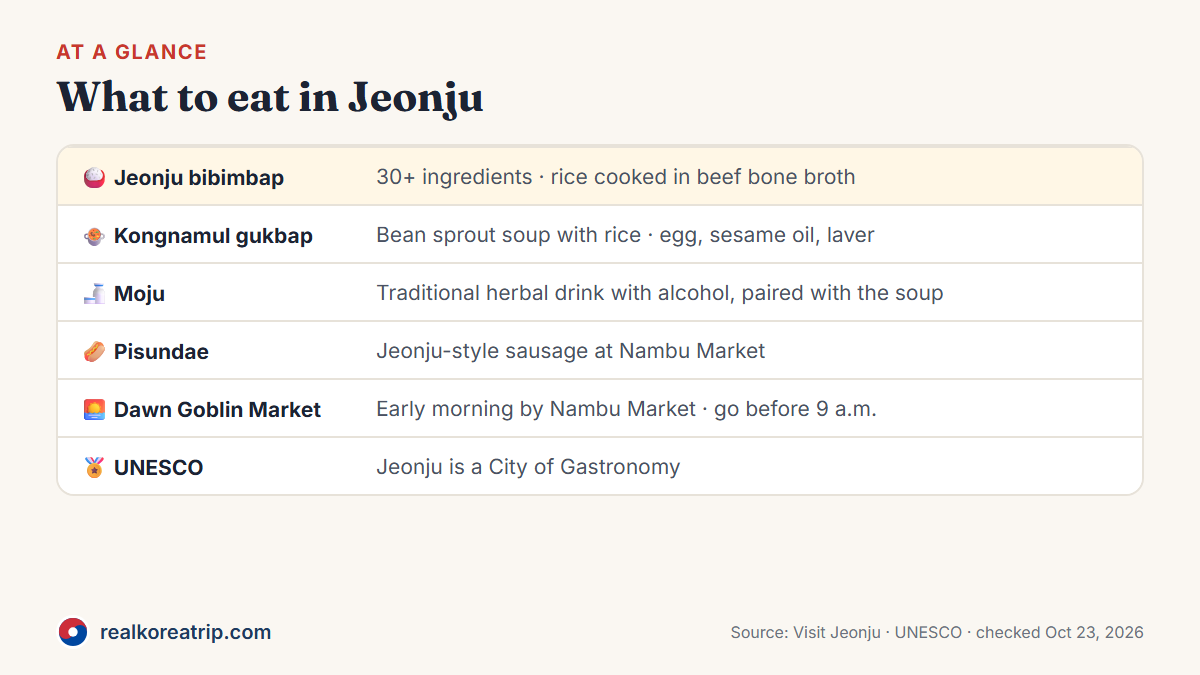
| Dish or place | What it is | Where |
|---|---|---|
| Jeonju bibimbap | Rice topped with more than 30 ingredients, mixed at the table | Old town, Hanok Village, around City Hall and the major markets |
| Kongnamul gukbap | Bean sprout soup with rice, a local haejang (morning-after) meal | Nambu Market and specialist restaurants |
| Moju | A traditional alcoholic drink boiled with herbs, served with the soup | Same places as kongnamul gukbap |
| Pisundae | Jeonju-style blood sausage in pig intestine | Nambu Market |
| Nambu Market | Jeonju's main traditional market, with an early-morning market, youth mall and night market | Next to Pungnammun Gate, near the Hanok Village |
Source: Visit Jeonju — food and Nambu Market; checked Oct 23, 2026.
Jeonju bibimbap
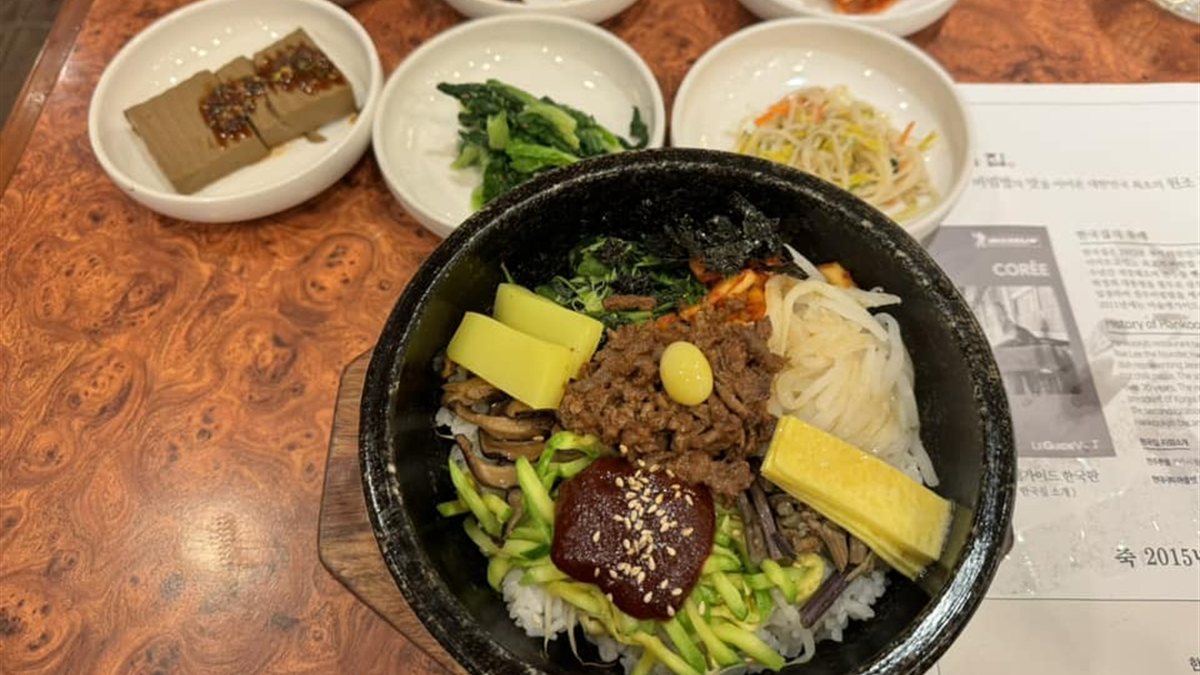
Jeonju City calls bibimbap a representative K-food dish and Jeonju its home. Jeonju City describes its version as more than 30 ingredients in one bowl, arranged in five colors, and lists what makes it different:
- rice cooked in rich beef bone broth
- Jeonju's crunchy bean sprouts
- yellow muk jelly, which the city says is made with water from the Nokdupo spring at Omokdae
- gochujang and soy sauce fermented the traditional way
The city says bibimbap restaurants cluster around the old town, the Hanok Village, Jeonju City Hall and Jeonju's three major markets. One it highlights is Gajok Hoegwan, opened in 1979 by Kim Neon-im, Jeonju's first designated food master, and now run by the third generation. The bowl comes with side dishes, bean sprout soup and steamed egg.
Source: Visit Jeonju — Jeonju bibimbap; checked Oct 23, 2026.
Kongnamul gukbap: bean sprout soup with rice
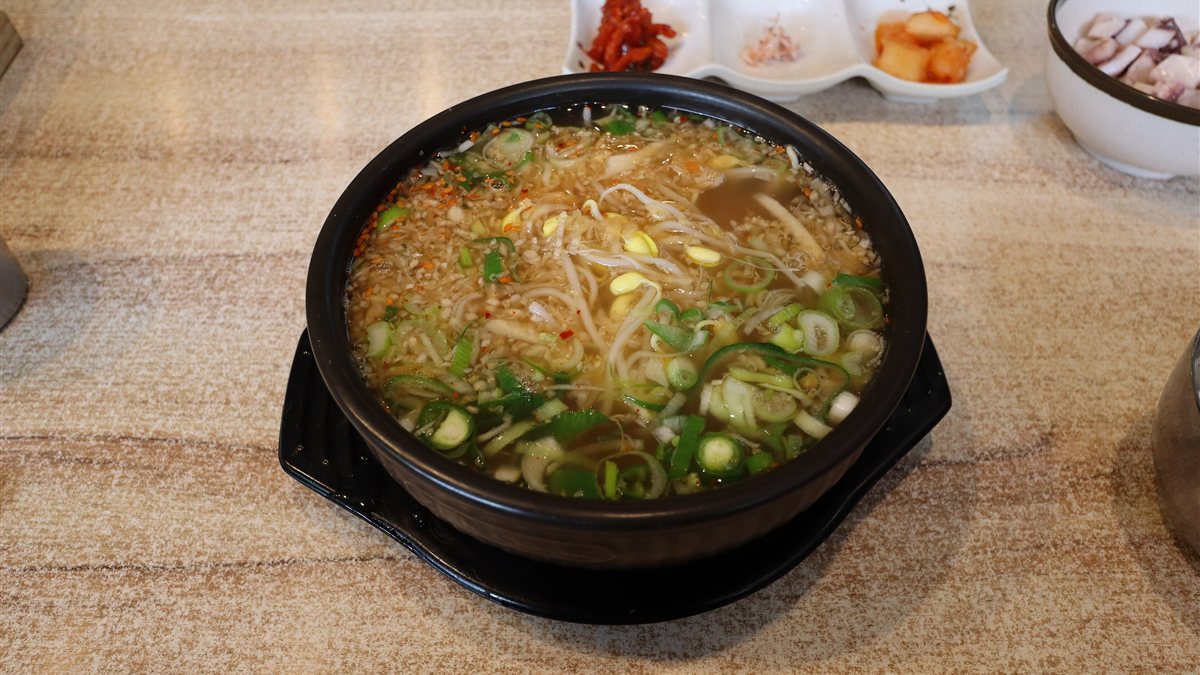
This is Jeonju's other signature bowl. In the Nambu Market style, the city explains, boiled bean sprouts and rice are cooled in the bowl, then a hot broth made from dried anchovies and kelp is poured in and out over them. It's eaten with a poached egg, sesame oil and roasted laver (gim). Locally it's known as a haejang meal, the kind of soup people eat the morning after drinking.
The traditional partner is moju, a traditional alcoholic drink boiled with herbs, which Jeonju City's food guide pairs with kongnamul gukbap. Treat it as a cultural food pairing, not a hangover treatment, and skip it if you're driving or avoiding alcohol.
Source: Visit Jeonju — Nambu Market; checked Oct 23, 2026.
Nambu Market
Nambu Market is the main traditional market of the Jeonbuk region, beside Pungnammun, the old city gate that was rebuilt after a fire in 1767. It sits near the Hanok Village, and since the 2000s its youth mall and night market have drawn visitors from the village.
Three things to look for there:
- Pisundae, Jeonju-style sausage: pig intestine stuffed with vegetables, meat and blood, but no glass noodles. The city says it's softer and thicker than sundae elsewhere, and it comes with chives and vinegared red pepper paste.
- The Dawn Goblin Market (Dokkaebi Market), an early-morning street market by Jeonjucheon Stream next to Nambu Market, with fresh produce and snacks like fried doughnuts and noodles. Jeonju City's dedicated market page lists 4–9 a.m., while its Nambu Market page says 4–10 a.m., so aim to arrive before 9.
- Kongnamul gukbap, the market's best-known meal (see above).
Source: Visit Jeonju — Nambu Market and Daybreak Market; checked Oct 23, 2026.
Why Jeonju is known for food
Jeonju is a member of UNESCO's Creative Cities Network as a City of Gastronomy. UNESCO's page calls it the "Taste City" and points to rice from the Honam Plain and seafood from the Yellow Sea as the base of its food culture.
Source: UNESCO Creative Cities Network — Jeonju; checked Oct 23, 2026.
Before you go
- Plan the trip itself with our Jeonju day trip guide.
- Save restaurant names in Naver Map and check they're open.
- Carry some won cash for market stalls; see paying in Korea.
- Up early? Try the Dawn Goblin Market, ideally before 9 a.m.
Source: Visit Jeonju — Daybreak Market; checked Oct 23, 2026.
FAQ
What is Jeonju famous for eating?
Jeonju bibimbap (the city calls itself "the home of bibimbap") and kongnamul gukbap (bean sprout soup with rice). Jeonju is a UNESCO City of Gastronomy.
What makes Jeonju bibimbap different?
Jeonju City lists rice cooked in beef bone broth, Jeonju bean sprouts, yellow muk jelly, and traditionally fermented gochujang and soy sauce, with more than 30 ingredients in one bowl.
What is moju?
A traditional alcoholic drink boiled with herbs, which Jeonju City's food guide pairs with kongnamul gukbap. It's a cultural pairing, not a hangover treatment, and it contains alcohol.
When is the Dawn Goblin Market open?
Early in the morning. Jeonju City's dedicated market page lists 4–9 a.m. and its Nambu Market page says 4–10 a.m., so arrive before 9 to be safe.
- Visit Jeonju (Jeonju City) — Food: Bibimbap
- Visit Jeonju — Nambu Market
- Visit Jeonju — Daybreak (Dokkaebi) Market
- UNESCO Creative Cities Network — Jeonju, City of Gastronomy
Last checked Oct 23, 2026. Details can change — please confirm with the official source before you travel.
Photo credits