Korean Street Food Guide: Tteokbokki, Gimbap, Fish Cakes and Winter Snacks
Quick answer
- Start with the classic trio: tteokbokki (rice cakes in gochujang sauce), sundae (Korean blood sausage) and fried foods. Koreans call the combination \"tteoktwisun.\"
- Easy first picks: gimbap and fish cakes. Fish cake skewers simmer in anchovy broth and are sold one at a time, the Korea Tourism Organization says. Spicy versions exist, so ask about the fillings or sauce.
- In winter, look for hotteok and bungeoppang (fish-shaped buns with red bean filling). For a market full of food stalls, Gwangjang Market's food street is open until 23:00 and on Sundays.
Most of the street food visitors run into in Korea is bunsik, the Korea Tourism Organization says: tteokbokki, sundae, gimbap, fish cakes and fried foods, sold at street stalls, snack shops and convenience stores. Bunsik literally means "food made of flour," but Koreans use it for any quick, simple meal. The Korea Tourism Organization describes bunsik as affordable and suggests ordering several dishes at once.
Below: what each dish is, seasonal snacks, where to find them and how ordering works.
Source: Korea Tourism Organization — Bunsik & Street Food (page updated Mar 24, 2023); checked Oct 26, 2026.
The short version
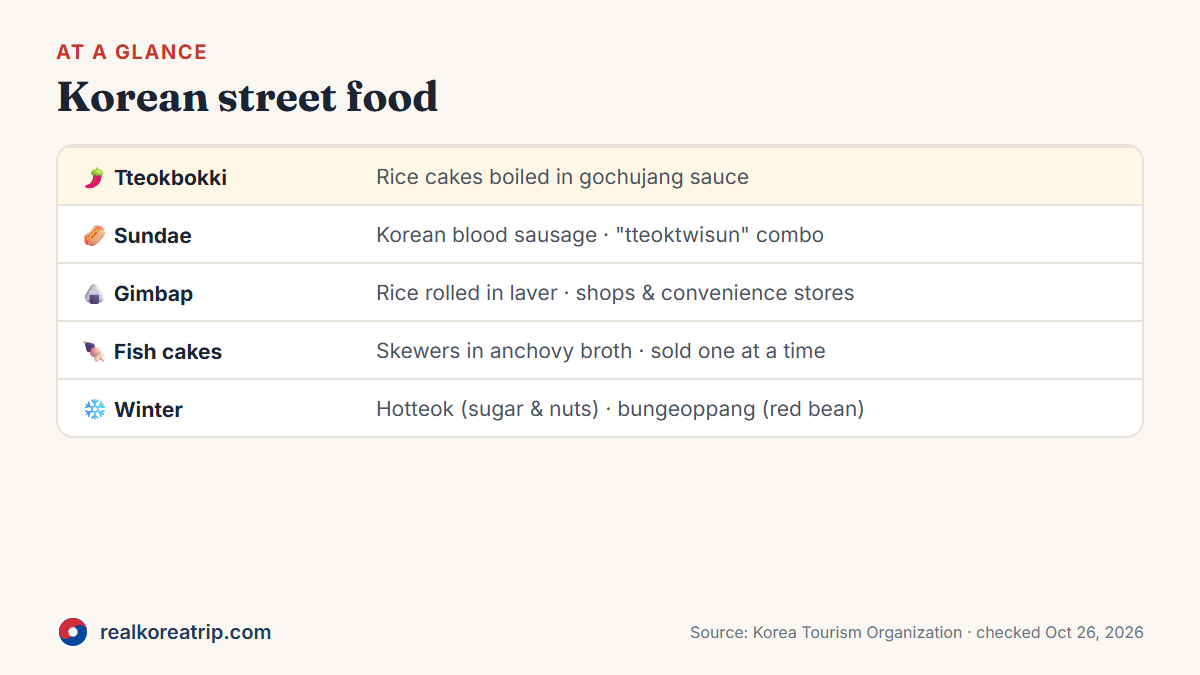
| Dish | What it is |
|---|---|
| Tteokbokki | Rice cakes boiled down in gochujang (red chili paste) sauce; cream and ramen versions too |
| Sundae | Pig intestines stuffed with glass noodles, sticky rice, vegetables and blood |
| Gimbap | Rice and fillings rolled in dried laver (seaweed) and sliced |
| Fish cakes (eomuk) | Skewered fish cakes simmered in anchovy broth, sold one at a time |
| Skewers | Chicken skewers with sauce, or fried rice cake skewers with sweet-spicy sauce |
| Hotteok (winter) | Fried dough filled with sugar and nuts; some have vegetables or cheese |
| Bungeoppang (winter) | Fish-shaped bun with red bean or custard filling |
Source: Korea Tourism Organization — Bunsik & Street Food; checked Oct 26, 2026.
The classics
Tteokbokki
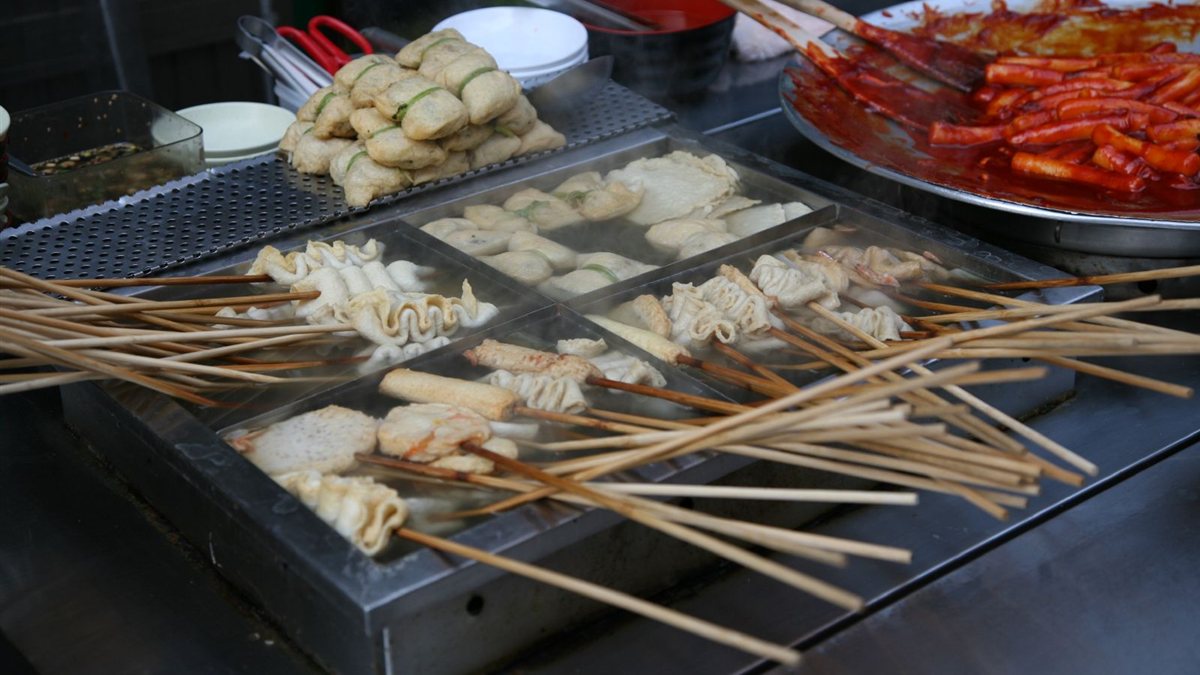
The Korea Tourism Organization calls tteokbokki the center of all bunsik. The usual way to make it is to mix rice cakes with gochujang seasoning and boil them down. You'll also see variations such as cream tteokbokki and ramen tteokbokki.
Sundae
Pig intestines are stuffed with a mix of minced blood, glass noodles, sticky rice and vegetables. The Korea Tourism Organization compares it to black pudding and haggis. Tteokbokki, sundae and fried foods ordered together are called "tteoktwisun."
Gimbap
Rice and fillings are laid on a sheet of dried laver, rolled and cut into bite-sized pieces. There are many kinds at many prices, and you can buy it at snack shops, convenience stores, service areas, supermarkets and department store food halls.
Fish cakes and skewers
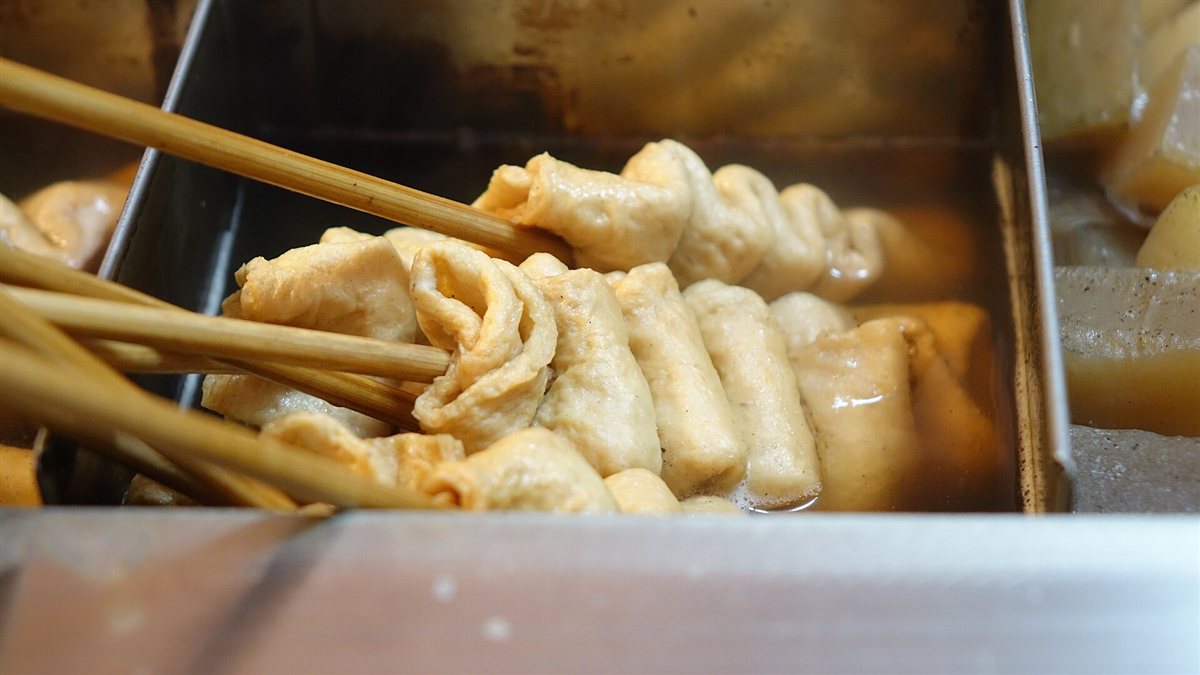
At bunsik stalls, fish cakes are usually skewered, simmered in anchovy broth and sold individually. Skewers also come as chicken with a layer of sauce, or as fried rice cakes brushed with a sweet and spicy sauce.
Source: Korea Tourism Organization — Bunsik & Street Food; checked Oct 26, 2026.
Seasonal snacks
| Season | Snack | What it is |
|---|---|---|
| Winter | Hotteok | Chewy dough filled with raw sugar and nuts, fried in oil |
| Winter | Bungeoppang | Crispy fish-shaped bun with red bean, or custard cream |
| Summer | Kongguksu | Noodles in cold, finely ground soybean soup |
| Summer | Bingsu | Shaved ice with sweet red bean, rice cake and fruit; often summer-only at snack shops |
The Korea Tourism Organization notes that bungeoppang is crispiest right after you buy it from a street cart, and suggests kongguksu as a dish for vegetarians; ask about the broth and toppings to be sure.
Source: Korea Tourism Organization — Bunsik & Street Food; checked Oct 26, 2026.
Where to find it
| Where | What to expect |
|---|---|
| Bunsik shops | Snack restaurants serving tteokbokki, gimbap and fried foods |
| Street stalls and carts | Skewers and, in winter, hotteok and bungeoppang |
| Convenience stores | Gimbap and popular snacks |
| Gwangjang Market, Seoul | A food street inside the market, by the East Gate, North Gate 2 and South Gate 1 |
Gwangjang Market
| Gwangjang Market | |
|---|---|
| Food street | Listed hours: 09:00–23:00, open daily; individual stalls may vary |
| General shops | Listed hours: 09:00–18:00, closed Sundays |
| Vintage / second-hand clothing shops | Listed hours: 10:00–19:00, closed Sundays |
| Address | 88 Changgyeonggung-ro, Jongno-gu, Seoul |
The Korea Tourism Organization calls it Korea's first permanent market. The market's own notice gives the same hours; individual stalls may keep their own.
Source: Korea Tourism Organization — Gwangjang Market and Gwangjang Market — opening hours notice (Korean, 2017); checked Oct 26, 2026. Getting there: Seoul subway guide. More: our Gwangjang Market food guide and Myeongdong guide.
Ordering and paying
- Point at what you want; at fish cake stalls, you usually pay by the skewer.
- Restaurants don't expect tips, and extra water or complimentary side dishes are free, the Korea Tourism Organization says; anything you order separately is charged.
- More places now have self-service water and side dishes, or ordering kiosks.
- If chopsticks are hard to use, a spoon is fine.
Source: Korea Tourism Organization — About Korean Food and Bunsik & Street Food; checked Oct 26, 2026. More: Korean etiquette and paying in Korea.
FAQ
What is bunsik in Korea?
Bunsik literally means "food made of flour," but it covers any quick, simple meal, such as tteokbokki, sundae, gimbap, fish cakes and fried foods.
Is tteokbokki spicy?
The usual version is made with gochujang (red chili paste). The Korea Tourism Organization also mentions variations such as cream tteokbokki and ramen tteokbokki.
When can I find hotteok and bungeoppang?
Mostly in winter. The Korea Tourism Organization describes both as winter street snacks.
What time is Gwangjang Market's food street open?
The Korea Tourism Organization lists the food street's hours as 09:00–23:00 daily. General shops are listed as 09:00–18:00, while vintage clothing shops are listed as 10:00–19:00; these shops close on Sundays. Individual opening hours may vary.
- Korea Tourism Organization — Bunsik & Street Food
- Korea Tourism Organization — About Korean Food
- Korea Tourism Organization — Gwangjang Market
- Gwangjang Market — Opening hours notice (Korean)
Last checked Oct 26, 2026. Details can change — please confirm with the official source before you travel.
Photo credits
We publish new guides regularly and update old ones when fares, rules or hours change. Follow our free RSS feed in any feed reader (such as Feedly or Inoreader), or check the latest guides on our homepage.